

Mawsil: History, Culture, Heritage and Guide to Mosul, Iraq
Introduction
Mawsil, also widely known as Mosul or Al-Mawsil, is one of the most historically significant cities in northern Iraq. Situated along the Tigris River in Nineveh Governorate, the city has long served as a meeting point for cultures, communities, commercial routes, and civilizations. Its location helped transform it into an important center of trade, education, architecture, and regional influence throughout different periods of history.
The name Mawsil is commonly associated with the Arabic meaning of a connection, link, or meeting point. This interpretation reflects the city’s historical position between regions, connecting northern and southern Iraq with territories toward Anatolia, Syria, and other parts of the Middle East.
Today, Mawsil represents much more than an ancient city. It is a place where historical traditions, distinctive architecture, cultural diversity, and modern rebuilding efforts come together. From the heritage of ancient Nineveh to its medieval Islamic monuments and traditional markets, Mawsil offers a fascinating perspective on Iraq’s past and its continuing cultural identity.
Where Is Mawsil Located?
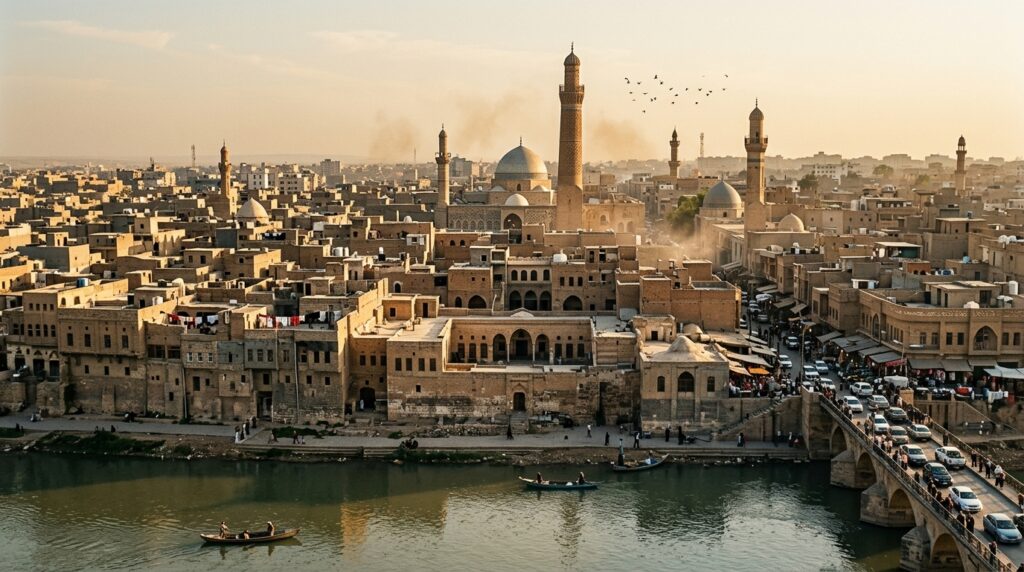
Mawsil is located in northern Iraq, within Nineveh Governorate, near the country’s northern borders and major regional transportation routes. The city lies beside the Tigris River, one of the most important waterways in Mesopotamian history.
Its geographical position contributed significantly to its development. Historically, merchants, travelers, scholars, and communities passed through the area while moving between Iraq, Syria, Anatolia, and other surrounding regions.
The river divides the urban landscape into eastern and western areas, while the historic city center is associated primarily with the western bank. Across the Tigris lies the archaeological area of Nineveh, an ancient city that played an extraordinary role in the history of Assyria.
Because of its strategic location, Mawsil became an important regional center for commerce, administration, agriculture, education, and cultural exchange.
What Does the Name Mawsil Mean?
The name Al-Mawsil is generally interpreted as meaning a connection or linking point in Arabic. This meaning is closely associated with the city’s geographical position and historical role as a crossroads between different regions.
For centuries, Mawsil connected trading networks and communities from different directions. Goods, ideas, languages, religious traditions, and artistic influences passed through the city, helping shape its identity.
The name therefore reflects an important characteristic of Mawsil: its ability to connect people and cultures. Its history includes Arab, Kurdish, Assyrian, Turkmen, and other communities, alongside different religious traditions that contributed to its cultural development.
The name is also written in several forms, including Mawsil, Mawṣil, Al-Mawsil, and Mosul. These variations appear in historical texts, modern publications, maps, and linguistic references.
The Ancient History of Mawsil and Nineveh
The history of Mawsil is closely connected to ancient Mesopotamia, one of the world’s earliest centers of urban civilization. The region surrounding the modern city contains archaeological remains associated with ancient settlements, empires, and cultural traditions that developed over thousands of years.
The most famous ancient site nearby is Nineveh. Located across the Tigris from modern Mosul, Nineveh was an important city of the Assyrian Empire. It became particularly prominent under powerful Assyrian rulers and served as an imperial capital during a significant period of ancient history.
Nineveh was known for monumental buildings, palace complexes, sculptures, defensive walls, and extensive cultural achievements. Archaeological discoveries from the area have helped historians understand Assyrian political power, religion, administration, art, and everyday life.
Although Mawsil and Nineveh are historically connected, they are not identical places. Nineveh was an ancient city, while Mosul developed as a separate urban center that eventually grew to encompass and surround parts of the wider archaeological landscape.
This connection gives Mawsil an exceptional historical setting. Visitors and researchers can explore a modern Iraqi city while remaining close to the remains of one of the ancient world’s most influential civilizations.
Mawsil During the Early Islamic Period
Mawsil became increasingly important following the early Islamic expansion into northern Mesopotamia during the seventh century. Its location made it valuable for military administration, regional governance, transportation, and trade.
During the early Islamic period, the city developed into an important center within the region known as Al-Jazira. Its political importance increased under successive administrations, and it became associated with commercial activity, religious institutions, and urban development.
The city’s strategic position allowed it to maintain connections with major centers such as Baghdad and other cities throughout the Middle East. Trade routes helped support economic growth while encouraging the movement of artisans, scholars, merchants, and travelers.
Over time, Mawsil developed a reputation for craftsmanship, textile production, and commercial activity. Its markets attracted people from nearby towns and distant trading centers, strengthening its position as a regional economic hub.
The Golden Age of Mawsil
One of the most influential periods in the history of Mawsil occurred during the medieval era, particularly under the Zengid dynasty in the twelfth century.
The Zengid rulers helped establish Mawsil as a major political and cultural center. During this period, the city experienced architectural development, educational growth, and increased regional influence.
Mosques, schools, public buildings, and other institutions contributed to its urban landscape. Religious scholarship and intellectual activity also played important roles in the city’s development.
Mawsil became known for its skilled craftsmen, especially those working with metals. Mosul metalwork was admired for its decorative designs, artistic details, and technical quality. Skilled artisans produced objects featuring engraved patterns, inscriptions, and intricate ornamentation.
The city’s influence extended beyond its immediate surroundings. Craftsmen and traders helped spread artistic techniques throughout other centers of the Islamic world, making Mawsil an important contributor to medieval craftsmanship.
Al-Nuri Mosque and the Al-Hadba Minaret
One of the most recognizable historical landmarks associated with Mawsil is the Al-Nuri Mosque, famous for its distinctive Al-Hadba Minaret.
The mosque was originally associated with Nur al-Din Zengi and was constructed during the twelfth century. Its minaret became particularly famous because of its noticeable inclination, which earned it the nickname Al-Hadba, commonly translated as the hunchback or leaning feature.
For generations, the minaret became a symbol of the city’s identity. Its unusual shape appeared in photographs, artwork, local memories, and descriptions of Mosul.
The mosque and minaret suffered extensive damage during the conflict that affected the city between 2014 and 2017. The destruction represented a major cultural loss, not only for residents but also for the wider heritage community.
Reconstruction efforts later focused on restoring the mosque and rebuilding the iconic minaret while preserving the historical significance of the site. The project became part of broader initiatives to revive Mosul’s cultural identity and restore damaged landmarks.
The Old City of Mawsil
The Old City of Mawsil is one of the most important areas for understanding the city’s architectural and cultural heritage. Its historic streets, traditional houses, markets, religious buildings, and neighborhood structures reflect centuries of urban development.
Traditional architecture in the Old City often features locally sourced stone, decorative brickwork, carved details, courtyards, and distinctive window designs. Some buildings contain ornamental elements that demonstrate the influence of Islamic, Christian, Ottoman, and regional architectural traditions.
The narrow streets and interconnected alleyways create a distinctive urban environment. Historically, these streets supported daily commerce, neighborhood relationships, religious activities, and community life.
The Old City also contains historic mosques, churches, educational buildings, markets, and other structures that demonstrate the multicultural character of Mawsil.
Although much of the area experienced severe destruction during the conflict, reconstruction and rehabilitation initiatives have worked to preserve important buildings, restore public spaces, and support the return of cultural life.
Cultural Diversity and Religious Heritage
Mawsil has historically been home to diverse ethnic, linguistic, and religious communities. Its cultural identity developed through centuries of interaction among people with different traditions and backgrounds.
The city has been associated with Muslim, Christian, and other communities, including traditions connected with the wider Assyrian heritage of the region. Historic churches, mosques, religious schools, shrines, and cemeteries reflect this diversity.
Christian heritage has played an especially significant role in the history of northern Iraq. Churches and monasteries in and around the region preserve connections to ancient Christian traditions, religious scholarship, and community life.
The coexistence of different communities influenced local customs, architecture, food, language, music, and commercial traditions.
Mawsil’s cultural richness is not simply a historical concept. It is reflected in the memories, family traditions, crafts, dialects, and everyday practices of its residents. Preserving these cultural elements remains an important part of rebuilding the city’s social identity.
Traditional Markets, Crafts, and Local Economy
Markets have historically been central to the economic and social life of Mawsil. Traditional commercial districts provided spaces where residents purchased household goods, food, clothing, tools, textiles, and handmade products.
The city’s location near important transportation routes helped support trade with other parts of Iraq and neighboring regions. Merchants played a major role in connecting local producers with broader markets.
Craftsmanship has also been an important part of Mawsil’s reputation. Metalworking, textile production, woodworking, decorative arts, and other traditional trades contributed to its cultural and economic heritage.
The historic markets were more than commercial spaces. They were gathering places where people exchanged news, maintained relationships, discussed business, and participated in community life.
Rebuilding markets and supporting local businesses are important components of the city’s recovery. Small enterprises, traditional crafts, and family-owned shops can help restore livelihoods while preserving cultural practices that might otherwise disappear.
Food and Culinary Traditions of Mawsil
Food is an essential part of Mawsil’s cultural identity. Local cuisine reflects the agricultural traditions, regional ingredients, family recipes, and culinary influences of northern Iraq.
Rice, wheat, meat, vegetables, spices, dairy products, and seasonal ingredients are commonly associated with regional Iraqi cooking. Meals are often prepared according to family traditions and served during gatherings, celebrations, and special occasions.
Mosul is particularly known for regional dishes and food traditions that distinguish its cuisine from other Iraqi culinary styles. Local cooks have preserved recipes through generations, while restaurants and food businesses continue to introduce traditional flavors to newer audiences.
Food in Mawsil is also closely connected with hospitality. Sharing meals with family, friends, neighbors, and guests is an important cultural practice. Traditional dishes often represent more than nourishment because they carry memories, regional identity, and connections between generations.
Exploring local food can therefore provide a meaningful way to understand the city’s culture and community life.
Mawsil During the Ottoman Period
Mawsil became part of the Ottoman Empire during the sixteenth century. Ottoman administration influenced its political structure, architecture, commercial activity, and urban development.
The city continued to function as an important regional center, with markets, religious institutions, residential districts, and administrative buildings contributing to its growth.
Ottoman-era architecture remains an important part of the city’s historical character. Traditional houses and public buildings often demonstrate regional construction techniques, decorative stonework, courtyards, and architectural features adapted to local conditions.
During the following centuries, Mawsil maintained its commercial importance, although economic changes and the development of new transportation networks gradually altered regional trade patterns.
The Ottoman period added another layer to the city’s heritage, complementing its ancient Mesopotamian and medieval Islamic history.
Mawsil in Modern History
Modern Mawsil experienced significant political, economic, and social changes during the twentieth century. As Iraq developed into a modern state, the city continued to serve as an important center for education, commerce, administration, and regional transportation.
Its population expanded, new neighborhoods developed, and educational institutions contributed to professional and cultural growth.
The city became known for its universities, schools, healthcare facilities, and commercial activity. The University of Mosul, established in the twentieth century, became an important educational institution serving students from the city and surrounding areas.
Modern development transformed the urban landscape, introducing new roads, housing, public facilities, and commercial districts while the historic Old City continued to preserve traditional architectural and cultural characteristics.
Conflict, Destruction, and Reconstruction
Mawsil experienced a devastating period of conflict between 2014 and 2017. The occupation by ISIS, followed by military operations to regain control of the city, caused extensive damage to infrastructure, homes, cultural landmarks, educational institutions, and historic neighborhoods.
The Old City suffered particularly severe destruction. Many families were displaced, businesses were damaged, and numerous heritage sites were lost or seriously affected.
The destruction of historic monuments highlighted the vulnerability of cultural heritage during conflict. Buildings that had survived centuries of political change and natural deterioration were damaged within a relatively short period.
Following the city’s liberation, rebuilding became a major priority. Reconstruction efforts have focused on housing, public infrastructure, schools, healthcare, cultural landmarks, religious buildings, and commercial areas.
International organizations, Iraqi authorities, local communities, and donors have contributed to rehabilitation programs. UNESCO’s Revive the Spirit of Mosul initiative has supported heritage reconstruction, education, and cultural activities.
The recovery process is not only about rebuilding structures. It also involves restoring livelihoods, supporting displaced families, strengthening educational opportunities, and rebuilding confidence within communities.
Tourism and Places to Explore in Mawsil
Mawsil offers several historically and culturally significant places that attract attention from researchers, heritage enthusiasts, and travelers interested in Iraqi history.
1. Old City of Mosul
The Old City provides insight into traditional architecture, historic markets, religious heritage, and neighborhood life. Its narrow streets and surviving buildings reflect the city’s distinctive urban history.
2. Al-Nuri Mosque
The Al-Nuri Mosque is one of Mosul’s most important historical and religious landmarks. Its reconstruction represents a significant effort to restore a symbol of the city’s identity.
3. Al-Hadba Minaret
The famous leaning minaret has long been associated with Mosul. Its restoration carries considerable cultural importance for residents and heritage preservation organizations.
4. Ancient Nineveh
The archaeological remains of Nineveh are among the most important ancient sites in the region. They provide opportunities to explore Assyrian history and the archaeological heritage of Mesopotamia.
5. Historic Churches and Religious Sites
Mawsil’s churches and other religious landmarks reflect its multicultural history. These sites are important for understanding the religious traditions and community relationships that shaped the city.
Travelers interested in visiting Mawsil should check current travel advisories, local security conditions, transportation arrangements, site accessibility, and visitor requirements before planning a trip.
Why Mawsil Matters Today
Mawsil matters because it represents the connection between history, cultural identity, and modern recovery. Its story includes ancient civilizations, medieval achievements, traditional craftsmanship, diverse communities, and contemporary challenges.
The city also demonstrates the importance of protecting cultural heritage during times of conflict. Historic buildings, archaeological sites, libraries, markets, and religious institutions are valuable resources that connect people with their past.
Reconstruction provides an opportunity to preserve architectural traditions, strengthen education, support local employment, and create renewed opportunities for future generations.
Mawsil’s recovery is therefore important not only for Iraq but also for the international community. Its heritage reflects the interconnected history of the Middle East and the lasting contributions of different civilizations.
Frequently Asked Questions About Mawsil
What does Mawsil mean?
Mawsil is commonly interpreted as a connecting point, link, or junction in Arabic. The name reflects the city’s historic position as a crossroads linking regions and commercial networks.
Where is Mawsil located?
Mawsil is located in northern Iraq, in Nineveh Governorate, beside the Tigris River. It lies near the archaeological remains of ancient Nineveh.
Is Mawsil the same as Mosul?
Yes. Mawsil, Al-Mawsil, Mawṣil, and Mosul are different transliterations or forms of the name used for the same modern Iraqi city.
Why is Mawsil historically important?
Mawsil is important because of its location near ancient Nineveh, its role in regional trade, its medieval Islamic history, its cultural diversity, and its architectural and artistic heritage.
What is Mawsil famous for?
Mawsil is famous for its historic Old City, Al-Nuri Mosque, Al-Hadba Minaret, connection to ancient Nineveh, traditional crafts, regional cuisine, and cultural heritage.
Can tourists visit Mawsil today?
Visitors may be able to travel to Mawsil, but conditions and access to specific sites can change. Travelers should check current security advisories, local guidance, transportation availability, and site access before visiting.
Conclusion
Mawsil is a historic city whose identity has been shaped by geography, trade, culture, architecture, and centuries of interaction between different communities. Its location beside the Tigris River and near ancient Nineveh gave it a distinctive place in the history of Mesopotamia and northern Iraq.
From its medieval achievements under the Zengid dynasty to its traditional markets, historic religious landmarks, and cultural traditions, Mawsil has preserved a rich heritage that continues to inspire interest.
Although conflict caused enormous damage, reconstruction initiatives and community efforts are helping restore important parts of the city. The story of Mawsil is ultimately one of historical significance, resilience, cultural connection, and hope for the future.